

Baffles in heat exchangers
Baffles in heat exchangers are often used as a core element in any shell and tube heat exchanger design. This short article will discuss the use of baffles and some common guidelines on their usage in heat exchangers.Continue Reading

Tube pitch in heat exchangers questions answered
Do you have some questions about tube pitch in heat exchangers! why not read this articleContinue Reading

How to calculate the Overall Heat Transfer Coefficient
How to calculate the Overall Heat Transfer Coefficient? Heat exchanger setup typically involves two flowing fluids separated by a solid wall. Heat is first transferred from the hot fluid to the wall by convection, the heat is then transferred through the wall by conduction, and lastly the heat is transferredContinue Reading

What is a compact heat exchanger?
Definition Compact heat exchanger can be characterized by its high ‘area density’ this means that is has a high ratio of heat transfer surface to heat exchanger volume. So Compact heat exchange is characterized by high heat transfer surface-area to volume ratios and high heat transfer coefficients compared to otherContinue Reading

Pipe Friction Head Loss Calculation
Pipe friction head loss calculation Pipe friction head loss calculation is important for sizing pumps, several equations have been developed to calculate pipe friction head loss, this article will explore the popular methods available.Continue Reading
Difference between Fanning friction factor and Darcy friction factor
Fanning friction factor vs Darcy friction factor What is the Difference between Fanning friction factor and Darcy friction factor? This short article discuss the difference between Fanning friction factor vs Darcy friction factor Fanning friction factor The Fanning friction factor is defined as follows: ff = fd /4 Where; ffContinue Reading
Hazen-Williams equation
Hazen-Williams equation is a popular approach for the calculation of head loss of liquid in piping systems. In this method, Hazen-Williams coefficient is introduced to the equation, the coefficient eliminates the need for using Reynolds number. The Hazen-Williams coefficient is mainly used to account for the pipe roughness or efficiency.Continue Reading

Common Causes of Overpressure
Common causes of overpressure below is a list of Common causes of overpressure in process operation. Utility failures, including: General power failure Partial power failure Loss of instrument air Loss of cooling water Loss of steam Loss of fuel gas or fuel oil. Loss of cooling duty, caused by: Loss ofContinue Reading

How to determine the number of Shell Passes in Shell and Tube Heat Exchangers
This short articles describes how to find how many shells needed in series that would be sufficient to perform the duty required.Continue Reading
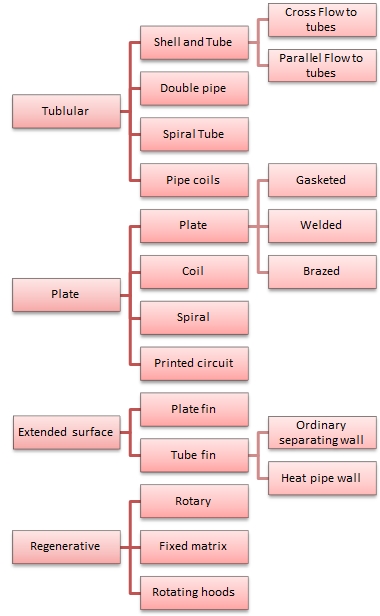
Classification of heat exchangers according to construction
What is a heat exchanger? A device to exchange the thermal energy between two or more fluids at different temperatures. In simple terms; if you want to use a hot fluid to heat up a colder one you can use a heat exchanger to do the job. Heat exchangers areContinue Reading


